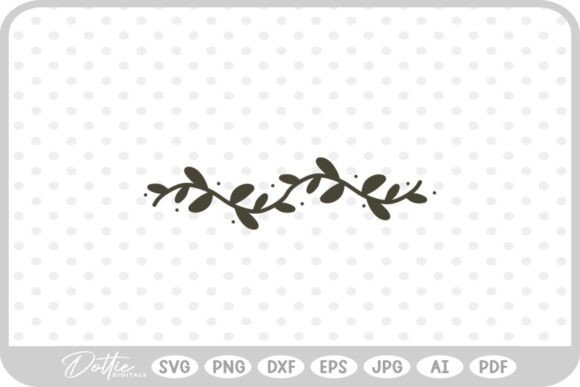
Evaluating the Botanical Vine Embroidery Design
As a designer who regularly translates digital files into stitched reality, I approach every new design with a practical eye. My first question isn’t about file formats, but about how it will live as thread on fabric. Today, I’m considering the Decorative Botanical Vine SVG PNG DXF for potential embroidery projects.
The Immediate Visual Mood: Where This Design Belongs
Upon opening the files, the design presents a gentle, organic flow. It’s not a rigid, symmetrical motif but a meandering vine with delicate leaves and blossoms. This creates a mood of casual elegance—it feels handmade by nature, not industrially perfect. That personality makes it a natural fit for projects where warmth and a touch of rustic charm are desired. I immediately pictured it on a linen apron, a cotton pillow cover for a cozy reading nook, or as a subtle accent on a baby’s knit blanket. It wouldn’t feel out of place on a boutique kitchen towel or a personalized wedding gift bag.
A Real-Life Scenario: Preparing a Custom Embroidered Tote
Let’s walk through a real case. Imagine a client orders a custom tote bag for a gardening friend. I want the design to reflect a love for plants without being a literal, heavy image. The Decorative Botanical Vine comes to mind. Its flowing shape could gracefully arc along the bottom edge of the bag or curl around a corner. In my mind, I stitch it. Using a soft green satin stitch for the leaves and a lighter fill stitch for the blossoms, the design would feel integrated, not just slapped on. The open, airy layout suggests it wouldn’t require an overly dense stitch area, which is excellent for a bag that will be folded and used roughly—heavy stitching can stiffen fabric.
Performance Across Real Embroidery Situations
This design’s versatility in file format—having SVG, PNG, and DXF among others—means it’s adaptable from digital mockup to machine embroidery file. For a craft business owner, that’s key. You can create a printable mockup for your Etsy listing to show the concept, then use a converted file to actually embroider the product.
On apparel like sweatshirts or t-shirts, the vine would work best as a smaller, chest-positioned accent or a sleeve detail. Its flowing lines could adapt well to the curved surface of a cap, provided the design size is adjusted to avoid squeezing the finer details. For baby clothes, its soft theme is perfect, but execution is critical—you’d want to use a very lightweight stabilizer and avoid stitching on stretchy knit areas to maintain comfort.
As an embroidered patch, it would be lovely, but the detail level requires attention. If the leaf outlines or blossom centers are very fine, you must ensure your stitch settings and hoop size can render them clearly without thread breaks. For commercial embroidery projects, like a series of pillow covers for a small shop, this design offers consistency; each product would have the same graceful feel, aiding brand consistency.
Where Careful Consideration is Needed
Not every design is for every fabric. The Decorative Botanical Vine has elements that demand a thoughtful approach. On dark fabric, the chosen thread colors must offer strong contrast to maintain clarity; a pale vine on a black sweatshirt might vanish. If using it on textured fabric like a thick blanket, the stitch density needs to be sufficient to anchor the design properly.
I would be cautious with very small hoop sizes. If you try to shrink the design down for a tiny corner on a tea towel, the intricate twists of the vine and small leaf details might become a muddled cluster of stitches. Similarly, on products that require frequent washing, like kitchen towels or baby items, a design with too many tiny, dense stitch junctions can wear faster. This layout, however, appears open, which is a positive sign for durability.
Affecting Visual Appeal and Customer Trust
How a design stitches out directly impacts perceived value. A clean, well-executed Decorative Botanical Vine on a tote bag suggests care and skill. It elevates a simple product into a handmade product with thought behind it. For an Etsy seller, this translates to buyer engagement and positive reviews. Customers recognize when a design fits the item’s purpose—a flowing botanical vine on an apron feels authentic and well-chosen, increasing giftability.
For the apparel decorator or small business owner, using a design with this natural personality helps avoid a generic, mass-produced look. It supports a narrative of craftsmanship. In a crowded market, that visual professionalism matters.
Practical Notes for the Embroidery Designer
Before committing this design to a client’s project or your shop inventory, here’s my standard checklist:
- Always test on scrap fabric first. Use the same material and color as your final product. See how the thread colors interact and whether any small detail areas stitch poorly.
- Check your stabilizer choice. A flowing design on lightweight cotton might need a cut-away stabilizer for stability, while a towel might do well with a tear-away.
- Review the design in both black and white mockups. This helps you judge its form independent of color, ensuring the shape itself is strong.
- Compare how it looks imagined on both light and dark backgrounds. Does it hold its visual weight?
- Confirm the licensing terms provided with the files. Before selling finished items or using the design in commercial embroidery, you must know your rights. The description notes these are cutting files for machines; ensure your intended embroidery use is covered.
- While the description mentions multiple formats for cutting machines, as an embroidery designer, your key step is to ensure your embroidery software can properly convert or use the provided file format for stitch creation. Check the compatibility for your specific embroidery project.
In essence, the Decorative Botanical Vine SVG PNG DXF strikes me as a design with a soft, applicable charm. It’s not a loud statement piece but a versatile accent that, with careful technical execution, can add significant value to a range of personalized gifts and small shop products. Its success will hinge on pairing it with the right fabric, scale, and thread palette—a perfect example of where digital design meets the tangible craft of embroidery.