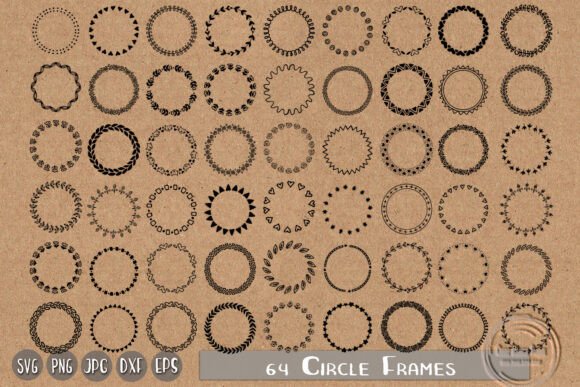
Decorative Frames: A Designer's Hands-On Review
As someone who stitches designs for clients and my own shop daily, I always approach a new embroidery file with a practical eye. I’m not just looking at the image on screen; I’m imagining it stitched out on fabric, held in someone’s hands, or hanging in a boutique. So when I evaluated the Decorative Frames, Hand Drawn Circles design, my first question was: does this graphic have the personality and practicality to translate into a real, sellable finished product?
The First Impression: Casual Charm with Versatile Potential
The hand-drawn aesthetic here is its greatest asset. These circles aren’t rigidly perfect; they have a casual, almost sketch-like quality. That immediately sets a friendly, approachable mood, which is perfect for the handmade market. It feels less like a corporate logo and more like a personal touch. This visual personality makes the design a natural fit for projects where warmth is key: personalized gifts, nursery decor, cozy kitchen towels, or a boutique’s brand identity that wants to feel artisan.
Where This Design Shines in Real Embroidery Projects
I mentally placed this design onto various surfaces. On a custom apparel piece, like a relaxed-fit sweatshirt, these frames would add a subtle, artistic accent without overwhelming the garment. They’d work beautifully as a singular element on a tote bag or as a repeated motif along the hem of a baby blanket. For small business merchandise, think tea towels, aprons, or simple pillow covers for a craft fair—products where the decoration supports the item’s function rather than dominates it.
The open, circular layout is also a fantastic canvas for personalization. Imagine a client’s name or a short date stitched neatly within the center. For Etsy sellers offering personalized gifts, like wedding or holiday keepsakes, this frame provides a structured yet informal border that enhances the text without competing with it. In digital product previews and printable mockups, this hand-drawn style lends credibility, suggesting a real, tactile embroidery project rather than a generic graphic.
A Practical Scenario: The Boutique Tote Bag
Let’s walk through a real case. I’m considering this design for a limited-run tote bag for my shop. The goal is an item that looks professionally made but has unique character. I’d likely choose one of the more detailed circles, stitch it in a contrasting thread color on natural canvas, and perhaps add a small embroidered word inside it. The hand-drawn lines of the frame would complement the fabric’s texture, and the overall effect would feel intentionally crafted. A customer would likely perceive it as higher value than a plain bag, trusting the handmade presentation. That’s the commercial potential here: elevating a simple product with thoughtful decoration.
Considerations for Stitching Success
While the design is versatile, its successful execution depends on mindful application. The hand-drawn detail means there are likely varied line weights and some intricate corners. On textured fabrics like linen or on stretchy fabric like a t-shirt, those fine details could get lost or distort without the right stabilizer. Small hoop sizes might also be a challenge if the design isn’t scaled appropriately—some elements may become too dense.
Dark fabric backgrounds require careful thread color contrast planning; a pale thread might make the sketchy lines pop beautifully, while a poorly chosen color could render the design faint. On curved surfaces like caps, the circular shape itself would adapt well, but the interior details need checking for stitching clarity.
- Always test on scrap fabric first. This is non-negotiable. Check how the stitch density behaves, especially in any filled areas.
- Inspect the small details. Zoom in on the file to see if any tiny junctions might need a slight adjustment in your machine settings.
- Compare light and dark backgrounds in your software. Use black and white mockups to judge readability before committing thread.
- Confirm the licensing. Before selling any finished items, ensure the digital embroidery file allows for commercial use of your finished product. This is crucial for craft business owners.
The Impact on Your Craft Business
Using a design like this effectively can influence more than just the item itself. For creative entrepreneurs, it can contribute to brand consistency if the hand-drawn style aligns with your shop’s overall aesthetic. It enhances giftability—a mug or pillow with this frame feels more thoughtfully designed than a generic transfer. For customer engagement, it offers a point of differentiation; in a market full of perfect vectors, this imperfect, human touch can be a recognition point.
Ultimately, Decorative Frames, Hand Drawn Circles isn’t a one-size-fits-all solution. It’s a specific tool with a specific mood. Its value lies in its ability to make a machine-embroidered product feel a little more personal, a little more artisan. That’s a powerful quality in a marketplace where customers are seeking authenticity. Approach it with a practical plan for your fabric, your machine, and your market, and it can become a reliable design asset in your embroidery project toolkit.